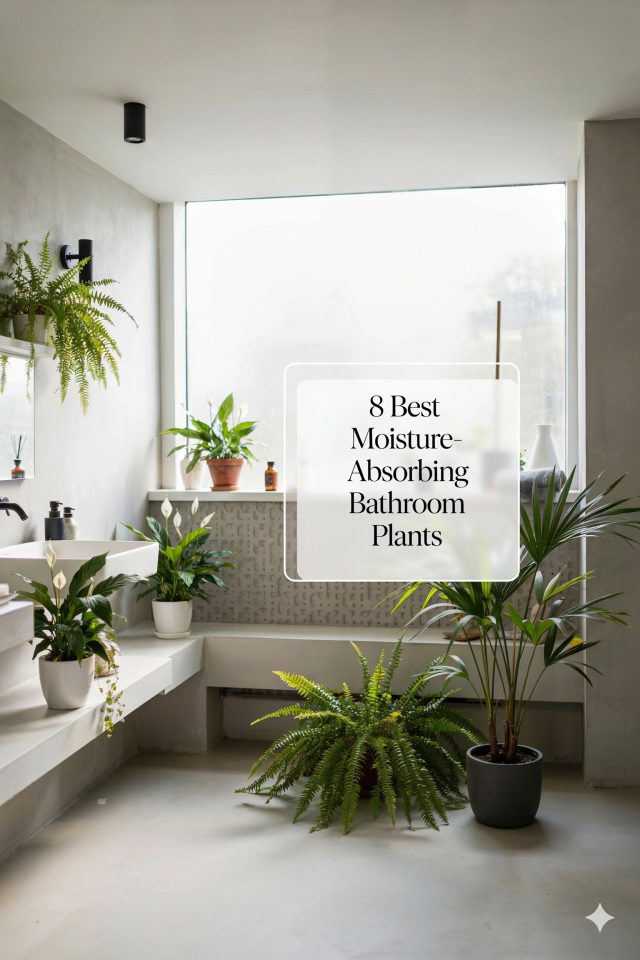
I never thought a plant could save my half bathroom. But after a winter of peeling paint, musty towels, and that lingering damp smell that no candle could fix, I decided to try something different. I started researching moisture-absorbing plants for half bathrooms and discovered a whole world of humidity-loving houseplants that don’t mind a dark corner. I grabbed a fern, a pothos, and a snake plant on a whim. Within a few weeks, my tiny bathroom felt fresher, and the green texture turned the space from forgotten utility closet to an actual cozy nook. This article shares exactly what worked for me and what I learned the hard way.
Why Half Bathrooms Are Perfect for Humidity-Loving Houseplants
A half bathroom (also called a powder room) is usually small, windowless, and gets steamy fast after a shower or even a hand wash. That humidity is a problem for paint and paper, but it is a dream for certain plants. Most humidity-loving houseplants come from tropical understories where moist air is the norm. They thrive on the dampness that makes half baths feel sticky.
The trick is choosing species that also handle low light. Most half bathrooms have little or no natural light, so ferns and snake plants become natural fits. I placed my first fern on the back of the toilet tank. It started putting out new fronds within two weeks. That told me I was onto something real.
If you are tired of wiping condensation off mirrors and smelling mildew, these plants offer a living solution. They pull moisture from the air through their leaves and roots, which is exactly what moisture-absorbing plants do best.
My Top 5 Moisture-Absorbing Plants That Actually Worked
Over the past year, I tested about a dozen different species in my tiny half bath. Some died fast. A few surprised me. Here are the five that survived, thrived, and noticeably reduced dampness around my sink and toilet area. I list them from most effective to least, but all are worth trying.
- Boston Fern (Nephrolepis exaltata) – This is the champion. It drinks humidity like a sponge. I keep mine on a small stool near the sink, and the air around it always feels drier. It does need occasional misting if your bathroom is on the cool side, but in a typical half bath, it just grows.
- Snake Plant (Sansevieria trifasciata) – Surprisingly, this one handles low light and high humidity without complaint. I have one in a corner that gets almost no light, and it has doubled in size. It absorbs moisture through its broad leaves and releases it slowly, which balances humidity.
- Pothos (Epipremnum aureum) – The classic trailing plant. I hung a pot from a small shelf above the toilet. The vines droop down and pull moisture from the air. It also filters common bathroom VOCs from cleaning products. Easy to propagate if you want more plants for free.
- Peace Lily (Spathiphyllum) – This one is a drama queen when dry, but it loves the moist air of a half bath. It produces white blooms even in low light. I found it best to place it near the door where it gets indirect light from the hallway. It definitely helps keep the ceiling corners dry.
- Spider Plant (Chlorophytum comosum) – Very forgiving. It sends out runners with baby plants, which you can stick in small pots around the room. It absorbs humidity and produces oxygen at night. Not as aggressive as the fern, but a solid performer.
Each of these plants has different needs, but all thrived in my half bath without direct sunlight. I water them once a week, sometimes less, because the ambient moisture does most of the work.
How to Care for Low-Light Tolerant Houseplants in a Tiny Bathroom
You cannot just place a plant in a dark half bath and walk away. Even low-light tolerant houseplants need some light to survive. My bathroom has a small window that faces north, but it is frosted glass, so very little light comes through. For the first month, my peace lily started yellowing. I realized I needed to supplement.
I bought a cheap full-spectrum grow bulb and screwed it into the existing vanity light fixture. I leave it on for about six hours a day. That simple change made a massive difference. If your half bath has zero windows, you absolutely need a grow light or you will watch your moisture-absorbing plants slowly decline.
Another tip: do not overwater. In a humid bathroom, soil stays wet longer than you expect. I killed two pothos by watering them on my usual schedule. Now I stick my finger into the soil up to the first knuckle. If it feels damp, I skip water for another three days. This is the most common mistake people make with bathroom plants, including me.
Also, clean the leaves every few weeks. Dust and soap residue from the air block the pores that absorb moisture. A quick wipe with a damp cloth keeps them working efficiently. I do it when I clean the toilet, so I never forget.
Practical Small Bath Decor Ideas to Display These Plants
Half bathrooms are tiny, so every inch counts. I tried a few arrangements until I found what works without making the room feel cramped. First, vertical space is your best friend. I installed a narrow floating shelf above the toilet. That shelf holds a snake plant and a small spider plant without taking any floor area. It also draws the eye upward, which makes the room feel taller.
Another idea: use a wall-mounted planter near the mirror. I bought a simple ceramic pocket that attaches with adhesive strips. I put a small fern in it. It hangs right at eye level and adds green texture without crowding the sink counter. The humidity from hand washing feeds it directly.
If you have a corner near the toilet, a small wooden stool or plant stand works great. I used a thrifted side table for my Boston fern. The added height stops the fronds from brushing against the toilet, and it creates a mini green statement. For trailing plants like pothos, hang a macrame holder from a hook in the ceiling or above the door frame. My pothos hangs just above the towel rack, and the vines frame the mirror nicely.
Remember to pick pots with drainage holes. Even if you are careful, excess water can pool and cause root rot. I use saucers under each pot. You can find cute ceramic saucers that double as decor. Avoid plastic pots in a steamy room because they can trap moisture against the walls and cause mold. Terracotta or glazed ceramic breathes better.
Common Mistakes I Made with Bathroom Plants (And How to Avoid Them)
I want to share my failures so you do not repeat them. First mistake: I placed a calathea in my half bath. It curled up and got crispy edges within a week. Calatheas need high humidity but also bright indirect light and very specific water. My half bath was too dark, and the tap water made it worse. Stick to the five plants I listed. They are forgiving.
Second mistake: I put a plant directly on the windowsill. That sounds logical, but in a half bath, windowsills are often drafty. During winter, the cold air killed my fern’s new growth. Now all my plants are at least a foot away from any window or exterior wall. The stable temperature inside the room is better for them.
Third mistake: I ignored airflow. A closed half bath can get stagnant. I started leaving the door slightly ajar for an hour after showers to let some air circulate. That reduced mold on the soil surface and kept the plants healthier. You do not need a fan, just a crack of the door.
Fourth mistake: I assumed more plants equaled more absorption. I crammed six plants into my tiny half bath. They competed for light and space, and the room felt cluttered. Three to four well-placed plants work better than a jungle. The fern and snake plant together already dropped the humidity noticeably. Quality over quantity applies here.
Fifth mistake: I overwatered because I thought the humidity meant they needed less water. Actually, the plants use their roots to take up water from the pot, not just from the air. Stick to a schedule based on the soil, not the air moisture. I learned that lesson slowly.
A Quick List of Plants to Avoid in Humid, Low-Light Spaces
Not every humidity-loving plant works in a half bathroom. I tried a few that failed hard. Here is a short list of plants I recommend skipping unless you have a bright bathroom.
- Succulents and cacti – They rot quickly in damp air. I lost two echeverias in two weeks.
- Orchids (most varieties) – They need high light and air movement. Mine got mold on the bark medium.
- Fiddle leaf fig – It drops leaves in low light and hates wet feet. It turned into a sad stick.
- Aloe vera – Another succulent that cannot handle constant steam. It turned brown and mushy.
- Majesty palm – It looks great but requires bright light and frequent misting. In a dark half bath, it declined fast and got spider mites.
Stick with the ferns, snake plants, pothos, peace lilies, and spider plants. They are the workhorses of moisture-absorbing plants for half bathrooms. I learned the hard way that not all green things are meant for small, humid, dark spaces.
The Real Benefit of Adding Green Texture to Tiny Bathrooms
Beyond the practical moisture control, the plants change the whole feel of a half bathroom. Before, my powder room felt like an afterthought. White walls, a small mirror, a toilet, and a sink. It was purely functional. Now when I walk in, I see living green shapes. The soft fern fronds, the upright snake plant, the trailing pothos. That green texture softens the hard edges of the room and makes it feel intentional.
Guests have commented on it too. They ask if I water the plants and seem surprised when I say they thrive here. It becomes a talking point. Plus, knowing the plants are actively pulling excess moisture from the air gives me peace of mind. I have not repainted the ceiling or scrubbed mildew off the grout since I added them. The air smells cleaner, not like chemicals or damp towels.
Is it a magic cure? No. You still need a fan or a cracked door for ventilation. But combining those habits with a few hardy plants creates a system that works with the room, not against it. I honestly believe every half bathroom should have at least one moisture-absorbing plant. It is a small change that pays off in comfort and freshness.
If you are shopping for plants right now, start with a Boston fern and a snake plant. Place them in spots where they get some light (or a grow bulb) and water only when the soil is dry to the touch. Within a month, you will notice the difference. Your half bath will feel less damp, look more alive, and become a room you actually enjoy stepping into. Save this idea for your next plant shopping trip and try it for yourself.
#MoistureAbsorbingPlants #HalfBathIdeas #BathroomPlants #HumidityLoving #SmallBathroomDecor
Leave a Comment